
I think that for most of us, when we first start out with horses, we don’t realize how crappy most horses feel in their interactions with people. We assume that because people love horses, most horses must be fairly content and find enjoyment in their jobs. And so, we are impressed with the height a horse jumps, how fast it runs a barrel pattern, the agility with which it cuts a cow, or the extreme suspension displayed during a dressage test.

For me, there were various shifting points, beginning in my early teens, and continuing to this day – as I learned to recognize signs of distress and understand the forceful purpose of everyday equipment and practices. I realized I’d been idolizing the wrong thing. I’d been focused on a what a horse could be made to do – and using that to determine the success of the rider/handler.
Over time, I’ve realized that I’m not impressed by someone jumping over a picnic table if their horse is foaming at the mouth or is wearing a gag bit. I’m not impressed with a dressage horse if it has its head held vertical in a death grip and its mouth strapped shut. I’m not impressed with a fast barrel pattern if the horse is flipping over at the starting gate, ridden in a tie-down or has eyes bulging from his head. I’m not impressed by a dressage horse whose head is held vertical in a death grip, or a barrel horse flipping at the gate with bulging eyes. I’m not impressed by western pleasure horses trained with their heads tied down, or drugged to appear calm. I’m not impressed by a horse that “stands” for tacking while grinding its teeth, swishing its tail, or only behaving after being lunged to exhaustion. I’m not impressed by a horse that leads quietly only because there’s a chain across its nose.

The reason I’m not impressed by these things, is because I now understand that all these issues come from how the horse feels. And the horse is saying that things don’t feel good. If the horse doesn’t feel safe, is confused, has pent-up anxiety due to its living situation, is physically uncomfortable, etc, it tries to communicate but it is most often ignored to benefit the person and their pursuits. Often the behavior is normalized – “oh, she’s just full of energy today”. When people don’t know how to address deeper issues (or don’t realize they exist), they rely on crutches to jump ahead rather than improving their skill.
We’ve all done this at some point. My pony would run off with me when I was a kid. I got a stronger bit and my instructor taught me to tie my horse’s mouth shut so I could ride on the trails and on the beach. But my hope is that as a culture, we stop normalizing and ignoring stress behaviors. I hope that we each learn how to improve our own feel and clarity when our horse tells us something isn’t right. That we become horrified with the flagrant use of equipment to physically control the horse (“crutches”). And perhaps most importantly, that we, as a society, stop idolizing the things a horse can be made to do, and instead idolize how the horse feels throughout the process.


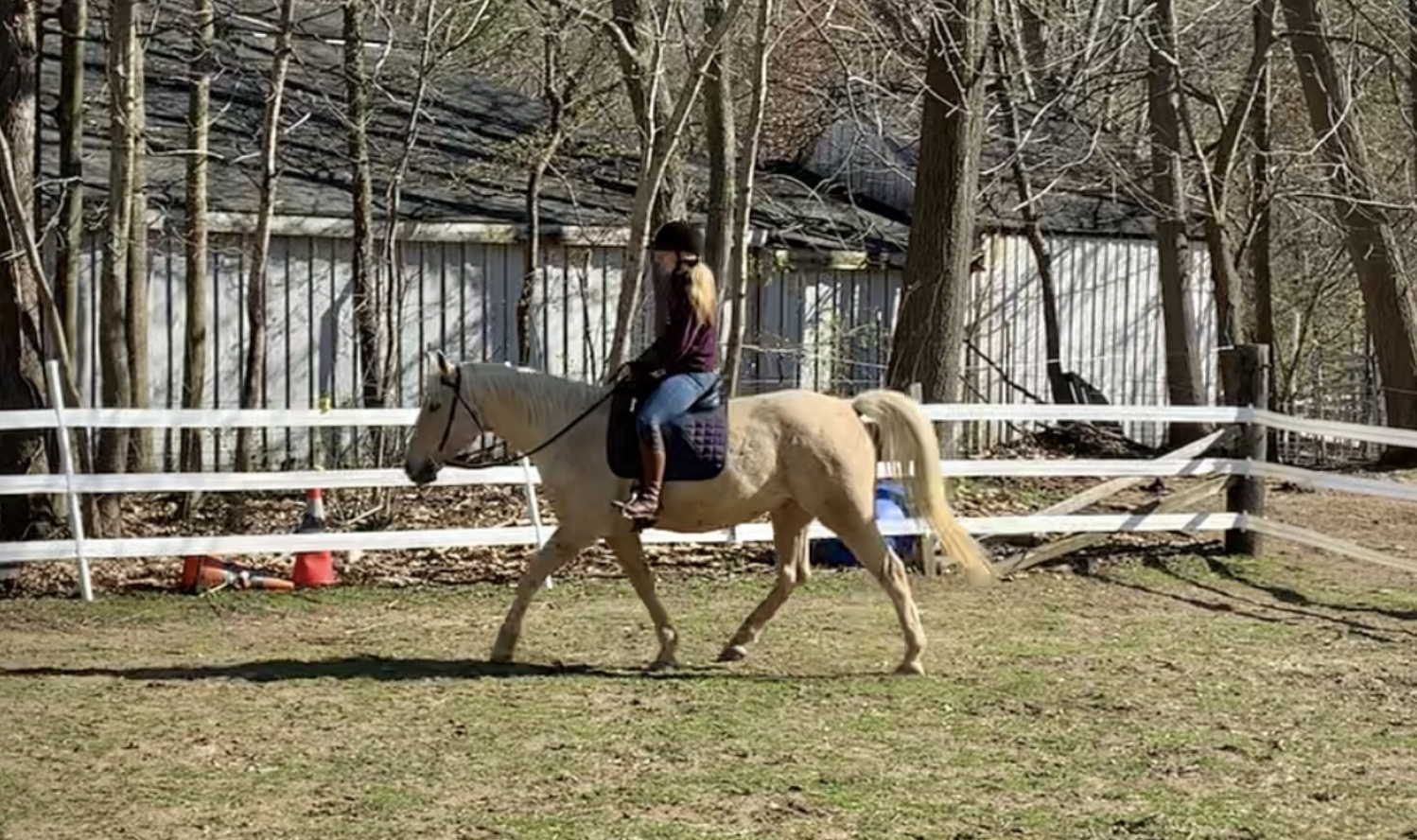
These days, I’m impressed by someone who can simply bring a horse in from the pasture, groom, tack up, and get on—all with the horse looking soft, attentive, and at ease. That’s rarer than people think. I’m impressed when someone moves with quiet intent and their horse subtly feels back to them while they walk, circle, transition, turn, or stop. In a stressful setting, this becomes even more impressive. When something scary happens, I’m blown away by the person who helps their horse regulate instead of blaming it or lunging it into exhaustion. And I’m always impressed when these things happen with simple equipment, soft communication, and no crutches.

I’m still working on improving my own feel and presence to help a variety of horses feel good in a variety of scenarios with increasingly little equipment. The more horses I work with, the easier all this becomes. But none of this is easy. That’s why people buy equipment that will allow them to jump ahead. It’s not easy at all! And it’s hard for people to accept that they may spend years developing the skills to perform day-to-day tasks in a way that feels good to their horse, rather than going to shows one year into riding lessons. We have to let go of long-held beliefs, form new physical patterns, develop more nuance and clarity, read our horses better, and treat them like sentient beings. It’s a journey but, at least for me, it’s so rewarding!
Leave a Reply