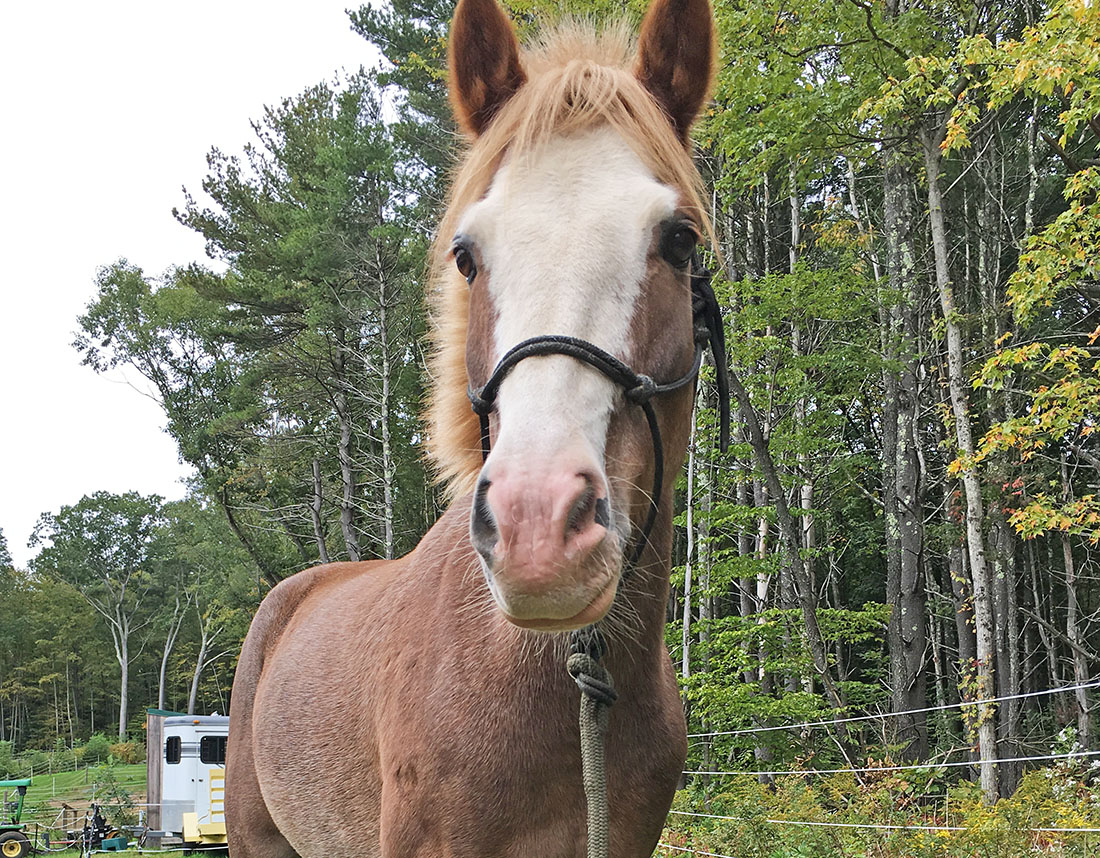
Below are the qualities that matter most, plus how to tie a halter, attach a lead rope, and where to buy reliable gear.
Rope Halters
A rope halter’s clarity of feel and overall severity come from a few key features.
Rope Stiffness and Material
A good rope halter should be made from quality rope—such as accessory cord—that’s stiff enough to hold its shape and carry a clear feel. Avoid soft cotton or nylon halters sold at big-box or hardware stores; they don’t carry any feel and are a waste of money. Double Diamond and Weaver/Silver Tip use much better materials.
Stiffer, coarser rope increases severity. I choose stiffer halters for horses that tend to push through pressure, which helps save wear and tear on the handler’s body.
Rope Thickness
Thinner rope creates more “bite” because the smaller diameter applies pressure more sharply, similar to why horses are less likely to lean on a thin bit. I generally use 1/4″ rope halters and switch to thinner options for horses that chronically push through a feel.
Number of Knots
Standard rope halters have two knots on the noseband. Some versions have four knots, creating more focused pressure points and increasing severity. I generally use two-knotted halters but sometimes use four-knot halters for horses inclined to lean or ignore light cues.
Rope Halters to Buy
Double Diamond sizing runs true: Horse fits most 14–15.3hh QH types, Warmblood fits most over 15.3hh, and Cob/Arab fits more refined heads.
Weaver sizing is more generous: Horse fits many 15–16.2hh QH types, and Oversize fits very large heads.
*** My Default recommendation ***
https://bitterrootsaddleco.com/dd-124-buck-brannaman-rope-halter
If I’ve encouraged you to get a halter with a bit more bite, I suggest one of these:
Weaver – 4 Knot – stiff accessory cord (firm)
https://www.weaverequine.com/products/silvertip-four-knot-rope-halter?variant=44117998633256&gad_source=1&gad_campaignid=22849689823&gbraid=0AAAAADuwbiYGNjFRaYCC1m3HQWrqAgPTz&gclid=EAIaIQobChMIx6ubnKmWkwMVMGBHAR30jAPtEAQYBiABEgLVmPD_BwE
Double Diamond – stiff but larger diameter (medium-firm)
https://bitterrootsaddleco.com/100-series-rope-halter/?searchid=24481&search_query=double+diamond
Tying a Rope Halter
Lead Ropes
A couple qualities affect the clarity and usefulness of a lead rope.
Rope Stiffness and Material
Choose a rope that’s sturdy and heavy enough to carry feel. Tree line is by far my favorite, as it is light enough in weight to easily carry and manipulate while also providing excellent feel. Yacht rope tends to be a bit too heavy, but it serves a purpose, especially when using longer ropes (16+ feet). The rope shouldn’t be a limp cotton or nylon that feels floppy.
Rope Length
Around 14 feet is the most versatile length. It’s short enough for daily leading and tying but long enough for groundwork and circling. Longer ropes (around 20 feet) are useful for larger circles or horses who need more space due to size or physical limitations.
Rope Attachment
Metal snaps disrupt feel and can be dangerously heavy if they hit the horse’s face—avoid them, especially bull snaps.
Better options:
• A spliced loop you run through the halter’s loop
• A plain rope end tied directly to the halter loop
The tied-on method gives the cleanest feel and is easier than it looks. I’ve included videos below.
Lead Ropes to Buy
+++ My default 14‑foot recommendation +++
https://bitterrootsaddleco.com/buck-brannaman-1-2-tree-line-lead-rope
20+ foot rope with a spliced loop for larger circles, dragging practice, etc.
https://www.knottygirlz.com/9-16-premium-polyester-yacht-braid-long-line/
Attaching a Lead Rope to a Halter
Plain Rope End Tied onto a Halter